
Manufacturing finishing materials based on a sample – what should clients know?
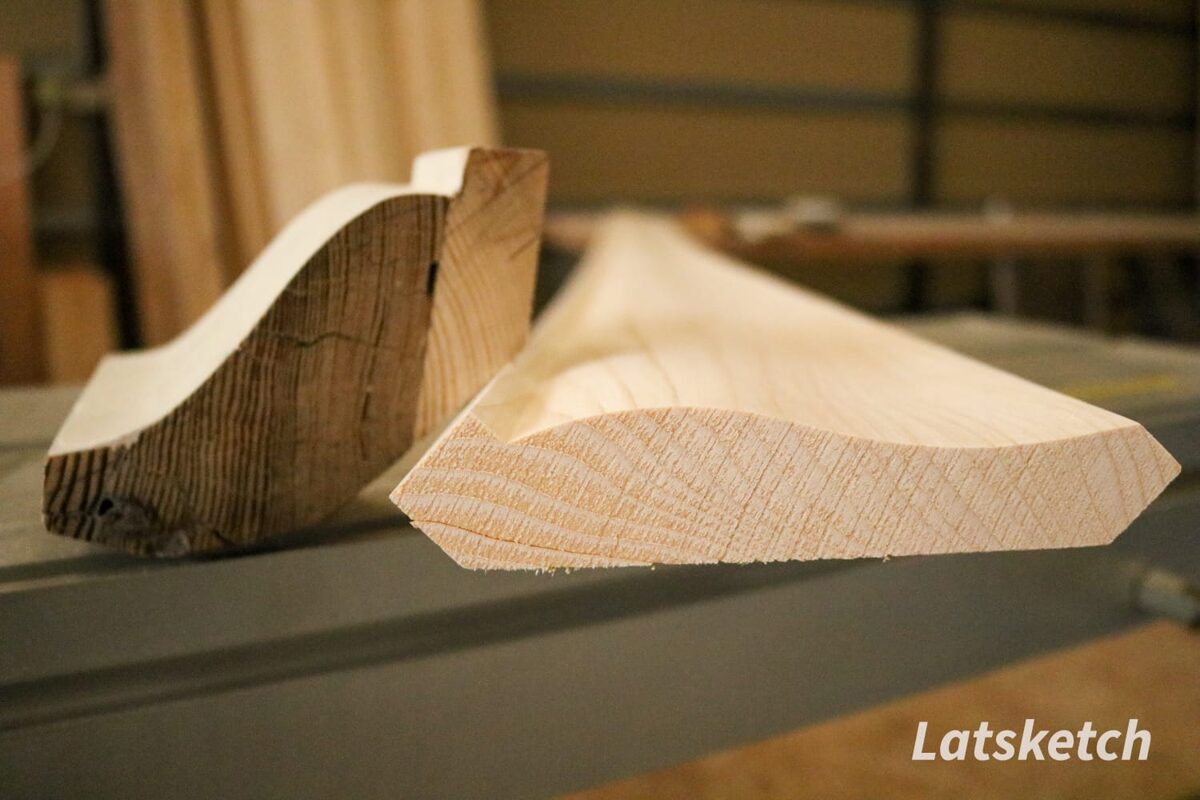
Manufacturing based on a sample involves analyzing available wooden elements or fragments from a historic building, taking the necessary measurements, preparing production drawings, and producing new components that match the original solution as closely as possible.
Finishing materials are often required for buildings that are more than a hundred years old. Although wooden finishing materials are an excellent solution for facades, and proper installation can ensure their durability for several generations, there comes a time when wooden elements need to be replaced. In many cases, wooden facades have deteriorated to such an extent that restoration is no longer possible, leaving full replacement of all wooden elements as the only option. We specialize in producing finishing materials that preserve the original appearance of buildings using new components.
In historic city centers, restoration projects often require finishing elements to be manufactured with maximum fidelity to the original design. Significant deviations from the dimensions and shapes of authentic elements are not permitted in such projects. Since the restoration of historic buildings requires specific expertise and often involves additional financial burden, municipalities or cultural heritage protection organizations are frequently involved, providing both informational support to the parties involved and financial assistance for restoration work.
In practice, there are also cases where a building is not a historic monument, but only certain elements – such as facade boards closer to the ground – are damaged. In such situations, replacing only the damaged boards is often more economically justified than restoring the entire facade.
To develop production drawings, a small sample of the existing finishing boards or decorative element is required, which the client provides. The sample does not need to be large for accurate measurements. The most important aspect is that the cross-sectional profile is clearly visible. It is important that the sample is not rotten, mechanically damaged, or significantly deformed, as this may affect measurement accuracy and the final result’s conformity with the original element. It should also be noted that when an element is covered with multiple layers of paint, slight deviations from the original dimensions may occur.
After the company’s specialists have taken the necessary measurements, production drawings, visualizations, and a price offer are prepared for the client. Drawings for the manufacturing of cutting tools are also created. Once the visualizations are received, it is important to review them carefully. It is also necessary to ensure that all finishing boards on the building are of the same width – historical buildings often feature boards of different types or dimensions.
Although restoration elements are manufactured based on a sample and their dimensions are followed precisely, minor deviations may still occur. There can be several reasons for this. In historical structures, elements were often made using hand tools, so even within a single element, differences of several millimeters may be present. Additionally, elements produced and used in different periods may have varying moisture levels and wood structures. Changes in humidity – either indoors or in the surrounding environment – can cause the wood to slightly deform, resulting in small gaps or cracks between elements.
The restoration of historic buildings and their finishing elements is an important investment in preserving cultural heritage. Each restoration project helps maintain the authenticity, architecture, and historical value of buildings for future generations. Our role in this process is to ensure that newly manufactured solid wood elements match the original solution as closely as possible.